Meaning
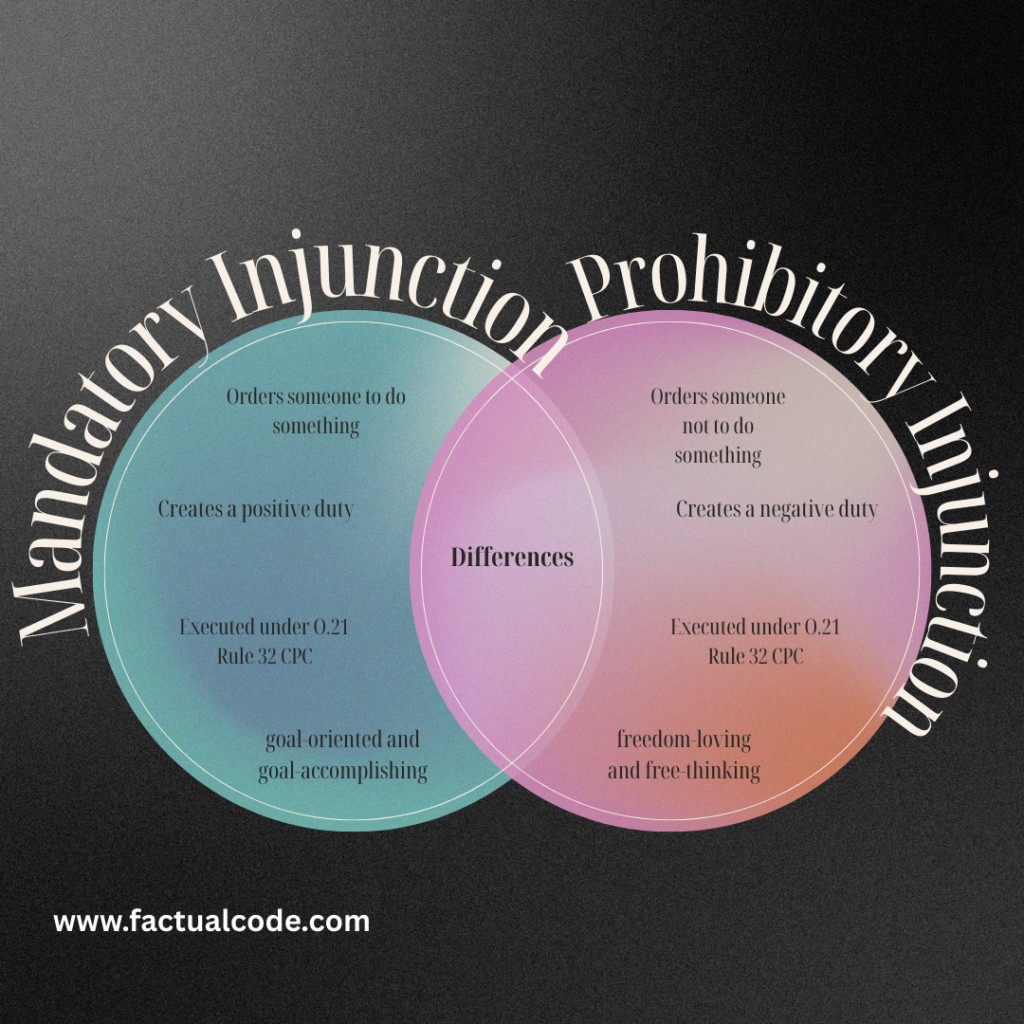
A mandatory injunction is a court order that requires someone to perform a specific action. For example, it may direct the removal of an illegal building, restore property to its original state, or compel compliance with a legal or contractual duty. While possession is usually given through a decree for possession or specific performance, a mandatory injunction can also achieve similar results.
Unlike a declaratory decree, which only recognizes rights, a mandatory injunction creates a binding legal duty. If the person fails to comply, the court has the authority to enforce it.
⚖️📘✨
Statutory Provisions
Order XXI Rule 32 CPC
This rule outlines how decrees for mandatory and prohibitory injunctions are executed, ensuring that court orders are effectively enforced.
Section 39 – Mandatory Injunction
Section 39 allows the court to compel performance of an act when necessary to prevent the breach of a legal obligation. It provides the substantive legal basis for granting a mandatory injunction, which is then enforced under the CPC.
⚖️📘✨
Modes of Execution
✨📘⚖️
If the judgment-debtor intentionally disobeys the order, the court can enforce it under Order XXI Rule 32 CPC in the following ways:
1. Detention in Civil Prison
The court may order the judgment-debtor to be detained in civil prison to compel compliance.
2. Attachment of Property
The court can attach the judgment-debtor’s property until the decree is obeyed. Continued disobedience may lead to additional legal actions.
3. Performance of the Act Through Court
Under Order XXI Rule 32(5) CPC, the court may direct that the act be performed by the decree-holder or another person appointed by the court, with costs recovered from the judgment-debtor.
This ensures that the act is actually completed. Even if the judgment-debtor refuses, the court can perform the required action—such as demolishing a structure or clearing a blockage—and recover the expenses.
⚖️📘✨
Limitation Period for Execution
✨📘⚖️
Execution must comply with Article 135 of the Limitation Act, 1963, which sets a three-year time limit from the date of the decree or the date fixed for performance.
This differs from prohibitory injunctions, which generally continue indefinitely and do not have a specific limitation period.
⚖️📘✨
Important Principles of Execution
Disobedience must be intentional.
Coercive powers like detention and attachment should be used carefully.
The court prefers having the act performed rather than only punishing the defaulter.
The executing court cannot alter the decree, but it can ensure full compliance.
⚖️📘✨
Judicial Interpretation
Courts have stated that procedural delays should not harm the decree-holder, but execution must be filed within three years under Article 135.
Even though the legal right continues, execution is strictly bound by the time limit, so the decree-holder must act promptly.
⚖️📘✨