
1. Introduction
The passing of a decree does not always bring an end to civil litigation. Although the court determines the rights and liabilities of the parties, the successful party may still be deprived of the actual relief granted if the judgment-debtor refuses to comply with the decree. The law, therefore, provides a mechanism through which the decree-holder can compel its enforcement. This process is known as execution of a decree.
The Code of Civil Procedure, 1908 (CPC), regulates execution under Sections 36–74 and Order XXI. In particular, Order 21 Rules 10–24 prescribe the procedure for filing an Application for Execution of a Decree, including its essential contents, the rights of joint decree-holders and transferees, scrutiny by the executing court, adjustment of cross-decrees, notice to the judgment-debtor and issuance of execution process.
Execution represents the enforcement stage of civil litigation. Its significance lies in converting the judicial determination of rights into effective and enforceable relief.
Order 21, Rules 10–24
Code of Civil Procedure, 1908 – Execution of Decrees and Orders. A quick reference to execution applications, scrutiny, parties, cross-decrees, notices and execution processes.
Rule 10 – Application for Execution
Where the holder of a decree desires to execute it, an application must be made to the Court which passed the decree, the officer appointed in this behalf, or the Court to which the decree has been transferred for execution.
- Execution proceedings ordinarily commence upon an application by the decree-holder.
- The application may be made before the Court of first instance or the transferee Court, as applicable.
Rule 11 – Form and Contents of Application
Rule 11 distinguishes between oral and written applications for execution. An oral application is permitted in the circumstances specified under Rule 11(1), while written applications must comply with the requirements of Rule 11(2).
- Oral application is permitted at the time of passing a money decree for immediate arrest of the judgment-debtor within the precincts of the Court.
- Written applications must contain the prescribed particulars, including details of the decree, parties, amount due and mode of execution sought.
- Rule 11(3) empowers the Court to require production of a certified copy of the decree.
Rules 11A–14 – Special Requirements
These provisions prescribe additional requirements concerning applications seeking arrest, attachment and sale of property.
- Rule 11A: An application seeking arrest must state the grounds and be supported by an affidavit.
- Rule 12: Prescribes particulars relating to movable property not in the judgment-debtor's possession.
- Rule 13: Requires particulars and a description of immovable property sought to be attached.
- Rule 14: Provides for production of a certified extract from the Collector's register where required.
Rules 15–16 – Joint Decree-Holders and Transferees
These rules deal with execution by joint decree-holders and persons to whom the rights under a decree have been transferred.
- Rule 15: One or more joint decree-holders may apply for execution for the benefit of all, subject to the Court's safeguards.
- Rule 16: A transferee or assignee of a decree may apply for execution subject to the prescribed conditions.
Rule 17 – Scrutiny and Admission
The Court examines an execution application to determine whether the formal requirements prescribed under Rules 11–14 have been complied with.
- The Court may permit defects to be corrected immediately or within a specified time.
- After admission, the application is entered in the appropriate register.
- The Court then proceeds according to the nature of the execution application.
Rules 18–20 – Cross-Decrees and Cross-Claims
These provisions deal with situations involving mutual decrees or cross-claims between parties and regulate the extent to which execution may proceed.
- Rule 18: Deals with execution of cross-decrees for payment of money between the same parties.
- Rule 19: Deals with cross-claims under the same decree, permitting execution for the balance where applicable.
- Rule 20: Extends the relevant principles to mortgage decrees.
Rule 21 – Simultaneous Execution
The Court has discretion to refuse simultaneous execution against both the person and property of the judgment-debtor.
- The provision prevents unnecessary harassment of the judgment-debtor.
- The Court may require the decree-holder to pursue one mode of execution before proceeding with another.
Rules 22–23 – Notice and Subsequent Procedure
These rules regulate the issuance of notice to the judgment-debtor or other concerned persons in specified circumstances before execution proceeds.
- Rule 22: Provides for show-cause notice in specified cases, including applications made more than two years after the decree and applications against legal representatives.
- The Court may dispense with notice in appropriate cases by recording reasons as required by the rule.
- Rule 23: If the judgment-debtor fails to appear or show sufficient cause, execution may proceed. If objections are raised, the Court considers them before passing an appropriate order.
Rule 22A – Death of Judgment-Debtor Before Sale
Rule 22A protects the validity of an execution sale where the judgment-debtor dies after the proclamation of sale but before the sale takes place.
- The sale is not automatically rendered void merely because the judgment-debtor died during this period without bringing the legal representatives on record.
- The Court may set aside the sale if it is satisfied that the legal representatives suffered prejudice.
Rule 24 – Issuance of Execution Process
After the necessary preliminary requirements are satisfied, the Court issues the appropriate process for execution of the decree.
- The process must bear the date of issue, the signature of the Judge or authorised officer and the seal of the Court.
- It must specify the date by which the executing officer is required to execute and return the process.
2. Competent Court for Filing an Execution Application – Order 21 Rule 10
Order 21 Rule 10 provides that a decree-holder seeking execution must apply to:
The court which passed the decree;
An officer appointed by that court for receiving execution applications; or
The court to which the decree has been transferred for execution.
This provision must be read with Sections 38 and 39 CPC. Section 38 recognises the jurisdiction of the court which passed the decree and the court receiving it for execution.
Under Section 39, a decree may be transferred where the judgment-debtor resides, carries on business or works for gain within another court’s jurisdiction, possesses insufficient property within the original court’s jurisdiction, or where the immovable property concerned is situated outside that jurisdiction.
Section 39(4) ordinarily prevents the original court from executing its decree against persons or property outside its local jurisdiction, subject to other express provisions of the Code.
In Mohit Bhargava v. Bharat Bhushan Bhargava, (2007) 4 SCC 795, the Supreme Court explained the territorial restriction under Section 39(4) and the necessity of transferring the decree where execution is sought against property outside the executing court’s jurisdiction.
3. Form and Contents of an Execution Application – Order 21 Rule 11
Order 21 Rule 11 is the central provision governing the form and essential contents of an Application for Execution of a Decree. It recognises oral and written applications.
A. Oral Application – Rule 11(1)
Where a decree is for payment of money, the court may, on an oral application made by the decree-holder at the time of passing the decree, order immediate execution by arresting the judgment-debtor before preparation of an arrest warrant, provided that the judgment-debtor is present within the precincts of the court.
The provision is exceptional and applies only to money decrees. It does not dispense with the substantive safeguards governing arrest and detention under Section 51 CPC.
B. Written Application – Rule 11(2)
Except in the circumstances mentioned under Rule 11(1), every execution application must be made in writing, signed and verified by the applicant or another person acquainted with the facts of the case.
It must contain the following particulars in tabular form:
Clause (a) – Suit number: The number of the original suit in which the decree was passed.
Clause (b) – Names of parties: Names of the decree-holder and judgment-debtor.
Clause (c) – Date of decree: The date on which the decree was passed.
Clause (d) – Appeal: Whether an appeal has been preferred against the decree.
Clause (e) – Payment or adjustment: Particulars of any subsequent payment or adjustment between the parties.
Clause (f) – Previous applications: Whether earlier execution applications were made, together with their dates and results.
Clause (g) – Amount or relief due: The decretal amount, interest, other relief and particulars of any cross-decree.
Clause (h) – Costs: The amount of costs awarded by the court.
Clause (i) – Person against whom execution is sought: Identification of the judgment-debtor.
Clause (j) – Mode of execution: The particular method through which the court’s assistance is requested.
The modes under clause (j) include delivery of specifically decreed property, attachment and sale of property, arrest and detention in civil prison, appointment of a receiver or any other appropriate method.
Under Rule 11(3), the court may require production of a certified copy of the decree.
Important connection: Rule 11(2)(e) must be read with Order XXI Rule 2. Payments or adjustments made outside court must be certified or recorded in the prescribed manner; otherwise, they cannot be recognised by the executing court under Rule 2(3).
4. Special Requirements Relating to Arrest and Attachment – Rules 11A–14
These provisions prescribe additional requirements depending upon the mode of execution.
Rule 11A – Application for arrest: An application seeking arrest and detention of the judgment-debtor must state the grounds for arrest or be accompanied by an affidavit containing those grounds. Under Section 51 CPC, mere non-payment of a money decree does not automatically justify imprisonment.
Rule 12 – Attachment of movable property: Where movable property belonging to the judgment-debtor is not in his possession, the decree-holder must annex an inventory containing a reasonably accurate description of the property.
Rule 13 – Attachment of immovable property: The application must contain a description sufficient to identify the property, including boundaries or survey numbers wherever possible, and specify the judgment-debtor’s share or interest in it.
Rule 14 – Collector’s register: Where attachment is sought against land registered in the Collector’s office, the court may require a certified extract showing the registered proprietors, transferable interests, persons liable to pay revenue and their respective shares.
Examination distinction: Rule 13 requires identification particulars of immovable property, whereas Rule 14 empowers the court to demand a certified Collector’s extract in appropriate cases. The latter is discretionary.
5. Execution by Joint Decree-Holders and Transferees – Rules 15–16
A. Joint Decree-Holders – Rule 15
Where a decree has been passed jointly in favour of two or more persons, any one or more of them may apply for execution of the whole decree for the benefit of all, unless the decree provides otherwise.
Where a joint decree-holder has died, execution may be sought for the benefit of the surviving decree-holders and the legal representatives of the deceased.
The court may make appropriate orders to protect the interests of those who have not joined the application.
Example: If A, B and C jointly obtain a decree against D, A alone may apply for execution of the entire decree for the benefit of all three, subject to the terms of the decree.
B. Transferee of a Decree – Rule 16
Where a decree or the interest of a decree-holder in a jointly passed decree is transferred by written assignment or operation of law, the transferee may apply for execution to the court which passed the decree.
Where the transfer takes place through assignment, notice must be given to both the transferor and the judgment-debtor, and their objections must be heard before execution proceeds.
Further, where a money decree against several persons is transferred to one of them, it cannot be executed by that transferee against the remaining judgment-debtors.
The Explanation to Rule 16, read with Section 146 CPC, permits a transferee of rights in the property forming the subject matter of the suit to apply for execution without a separate assignment of the decree.
A further jurisdictional qualification arises under Section 42(4)(a): a court to which a decree has been transferred for execution cannot order execution at the instance of a transferee of the decree itself.
6. Scrutiny and Admission of an Execution Application – Rule 17
Order 21 Rule 17 prescribes the procedure followed by the executing court upon receiving an execution application.
The court examines whether the applicable requirements of Rules 11–14 have been fulfilled. If defects or omissions are found, the applicant must be allowed to rectify them immediately or within the time fixed by the court.
Under Rule 17(1A), failure to remove defects within the permitted period results in rejection of the application. However, where the court finds an inaccuracy in the amount claimed under Rule 11(2)(g) or (h), it must provisionally determine the amount instead of rejecting the application.
Under Rule 17(2), an application amended to cure defects is deemed to have been presented in accordance with law on its original filing date. Every amendment must be signed or initialled by the judge.
After admission, the application is entered in the proper register and execution is ordered according to its nature under Rule 17(4). Its proviso requires that, in a money decree, the value of property attached should, as nearly as possible, correspond with the amount due.
7. Execution in Cases of Cross-Decrees and Cross-Claims – Rules 18–20
These provisions prevent unnecessary separate recovery proceedings where parties have reciprocal monetary liabilities.
Rule 18 – Cross-decrees: It applies where two money decrees have been passed in separate suits between the same parties and are simultaneously executable by the same court. If the amounts are equal, satisfaction is entered against both decrees. If unequal, only the holder of the larger decree may execute it for the balance after deducting the smaller amount.
The rule also contains conditions concerning assignees, the parties’ character in both suits, definite sums and joint and several liability.
Rule 19 – Cross-claims under the same decree: Where a single decree entitles two parties to recover separate sums from each other, equal amounts are adjusted against each other. If unequal, the party entitled to the larger sum may execute only for the remaining balance.
Rule 20 – Mortgage suits: The principles of Rules 18 and 19 also apply to decrees for sale in enforcement of a mortgage or charge.
| Basis | Rule 18 – Cross-Decrees | Rule 19 – Cross-Claims |
|---|---|---|
| Suits | Two separate suits | One suit and one decree |
| Claims | Separate decrees against each other | Reciprocal monetary claims under the same decree |
| Satisfaction | Adjustment of both decrees | Adjustment of both claims |
8. Simultaneous Execution – Rule 21
Order 21 Rule 21 empowers the court to refuse simultaneous execution against the person and property of the judgment-debtor.
Consequently, the decree-holder does not possess an absolute right to employ both methods simultaneously. The court exercises discretion to prevent unnecessarily excessive execution measures.
9. Notice to Show Cause – Rule 22
Order 21 Rule 22 requires the executing court to issue notice directing the concerned person to show cause why the decree should not be executed in the following circumstances:
Where execution is sought more than two years after the date of the decree.
Where execution is sought against the legal representative of a party to the decree.
Where execution is sought under Section 44A concerning a decree from a reciprocating territory.
Where execution is sought against an assignee or receiver in insolvency after the party to the decree has been adjudged insolvent.
Notice against a legal representative is an independent requirement and does not depend upon the expiry of two years, subject to the statutory exceptions.
The proviso dispenses with notice in specified circumstances, including where a previous execution order has been passed against the same legal representative. Under Rule 22(2), the court may also dispense with notice where it records reasons showing that notice would cause unreasonable delay or defeat the ends of justice.
Rule 22A – Death of Judgment-Debtor
Where the judgment-debtor dies after the proclamation of sale but before the actual sale, the sale shall not be set aside merely because the legal representative was not substituted. However, the court may set aside the sale if the legal representative has been prejudiced.
10. Procedure After Notice and Issuance of Execution Process – Rules 23–24
Rule 23 – Procedure after notice: Where the person receiving notice fails to appear or fails to show sufficient cause, the court shall order execution. If an objection is raised, the court must consider it and pass an appropriate order.
Rule 24 – Process for execution: After completing the necessary preliminary requirements, the court shall issue the appropriate execution process unless sufficient cause exists to the contrary.
The process must bear its date, be signed by the judge or authorised officer, bear the court’s seal and be delivered to the proper executing officer. It must specify the date by which execution is to take place and ordinarily the date for its return. However, omission to specify the return date does not invalidate the process.
The actual enforcement, whether by attachment, sale, arrest or delivery of possession, is governed by the subsequent applicable provisions of Order XXI.
11. Important Judicial Decisions
1. Vasudev Dhanjibhai Modi v. Rajabhai Abdul Rehman, (1970) 1 SCC 670
The Supreme Court held that an executing court cannot ordinarily go behind the decree or reconsider its correctness. However, an objection that the decree is a nullity for want of inherent jurisdiction may be raised where the defect appears on the face of the record.
2. Jolly George Varghese v. Bank of Cochin, (1980) 2 SCC 360
The Supreme Court held that mere inability to pay a decretal amount does not automatically justify imprisonment. The safeguards and statutory conditions under Section 51 CPC must be satisfied before ordering detention.
3. Rahul S. Shah v. Jinendra Kumar Gandhi, (2021) 6 SCC 418
The Supreme Court issued directions to prevent unnecessary objections and prolonged execution proceedings. It directed that execution proceedings should ordinarily be disposed of within six months, with extension permitted only by recording reasons in writing.
4. Periyammal (Dead) through LRs v. V. Rajamani, 2025 INSC 329
The Supreme Court reaffirmed the principles in Rahul S. Shah and clarified the relationship between Section 47 and Order XXI Rules 97 and 101 concerning objections and obstruction in possession decrees. It emphasised that execution proceedings cannot become a retrial of issues already decided and directed High Courts to monitor disposal of execution petitions within six months.
Recent Development (2026)
In its order dated 15 October 2026 in the continuing Periyammal proceedings, the Supreme Court further directed High Courts to operationalise District Execution Cells and ensure that executing courts call for affidavits of assets under Order XXI Rule 41(2). These measures aim to improve asset identification and remove practical obstacles to execution.
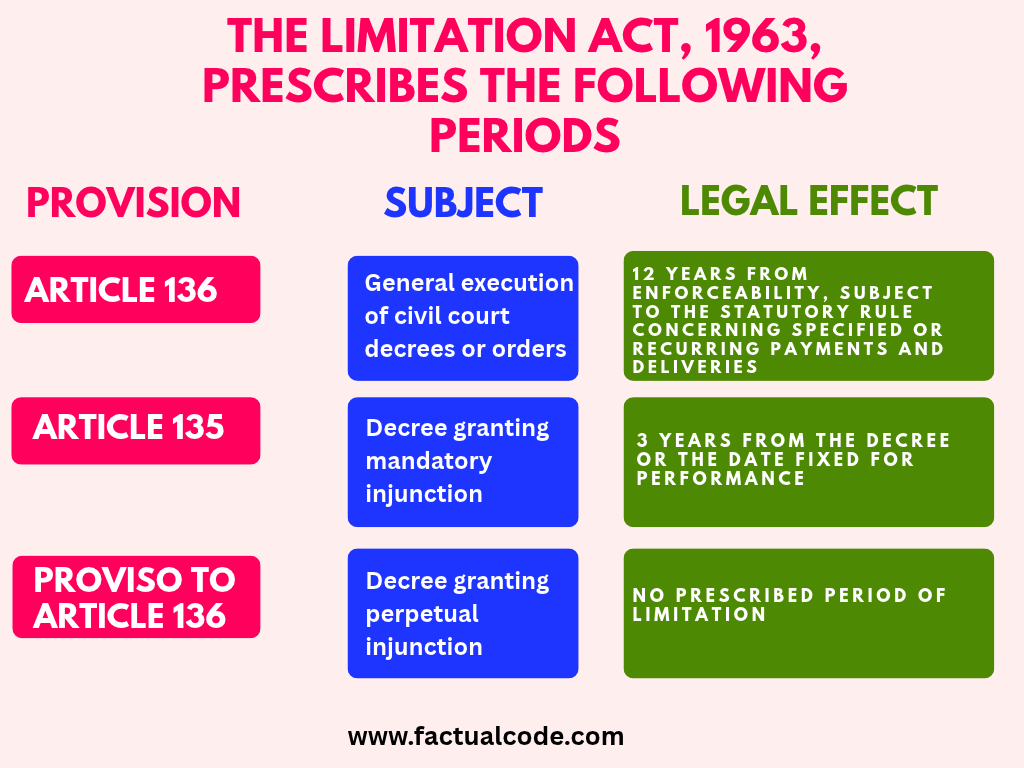
12. Limitation Period for Execution
13. Conclusion
Order 21 Rules 10–24 establish the procedural foundation for filing and proceeding with an Application for Execution of a Decree. They regulate the competent court, essential application requirements, attachment particulars, rights of joint decree-holders and transferees, judicial scrutiny, adjustment of reciprocal claims, notice and issuance of execution process.
These provisions balance the decree-holder’s right to obtain the fruits of litigation with the judgment-debtor’s procedural safeguards. Ultimately, the effectiveness of civil justice depends not merely upon the declaration of legal rights but upon their practical enforcement through timely and meaningful execution.